How Flowmynt engagements run for fintechs and banks, told as cases: the pressure, what arrives on day one, how the work runs, what comes back and what stays your decision.
These case studies describe engagement patterns, written without client names or invented figures. Each is adapted from work the founder's engineering company, Exekova, documents publicly, and each names its source.
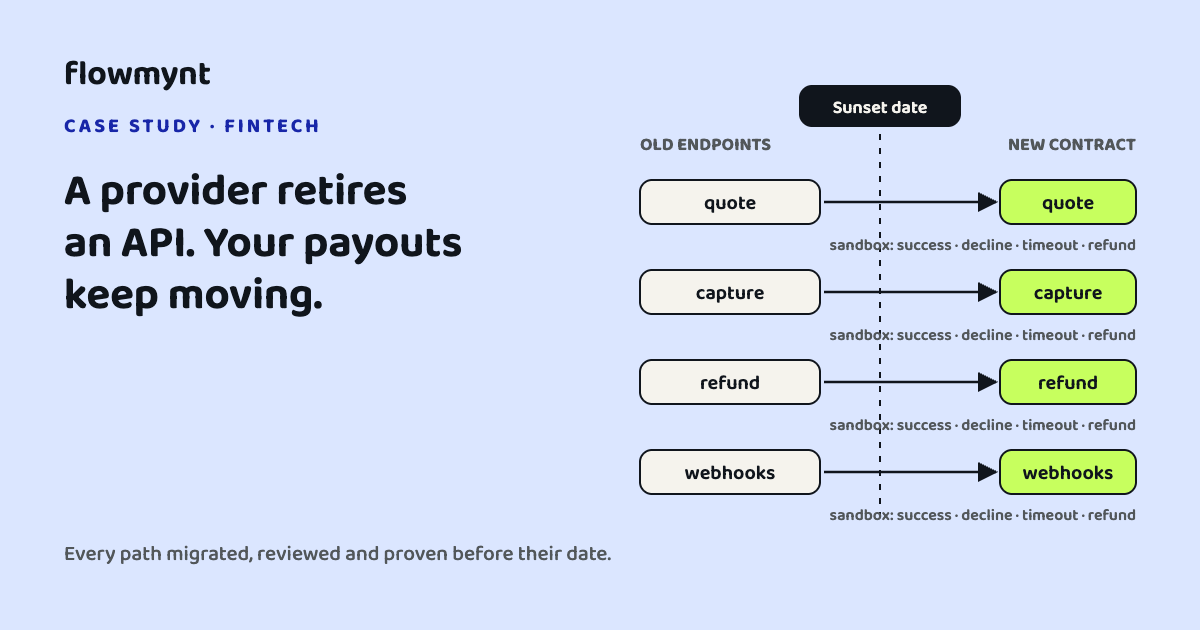
A payment provider sets a sunset date for the endpoints your quote, capture, refund and webhook paths depend on. Here is how Flowmynt migrates every path as one run, with sandbox evidence for each response case.
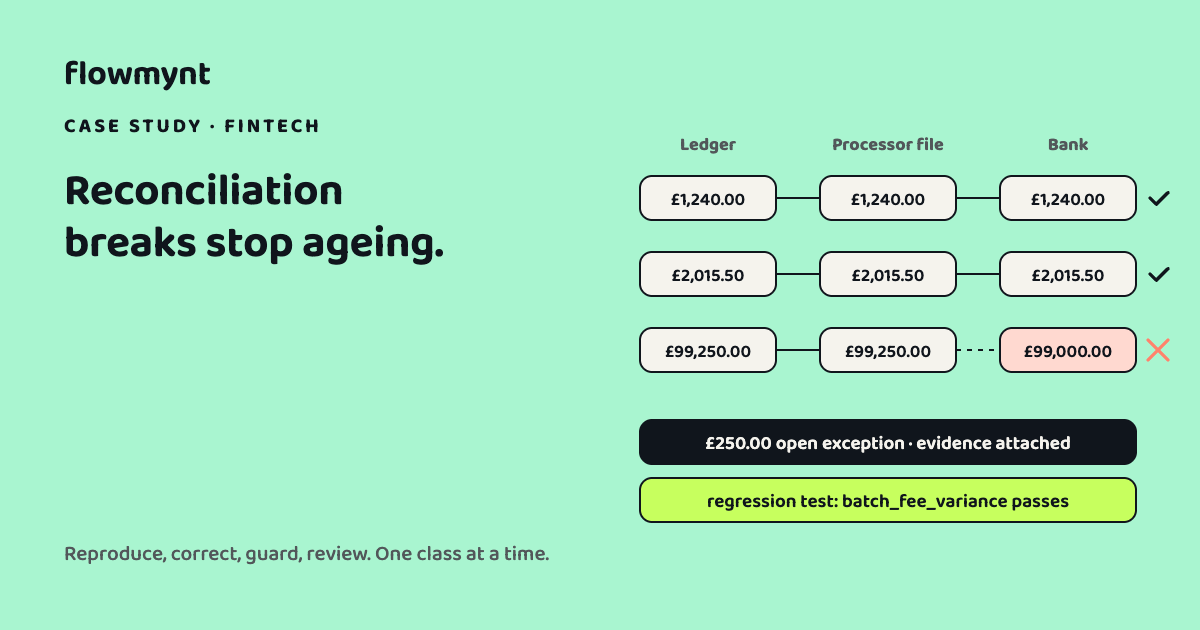
Mismatches between your ledger, the processor file and the bank statement are usually small logic gaps, but each needs reproducing before it can be fixed. Here is how Flowmynt drains the queue: reproduce, correct, guard and review inside one run.
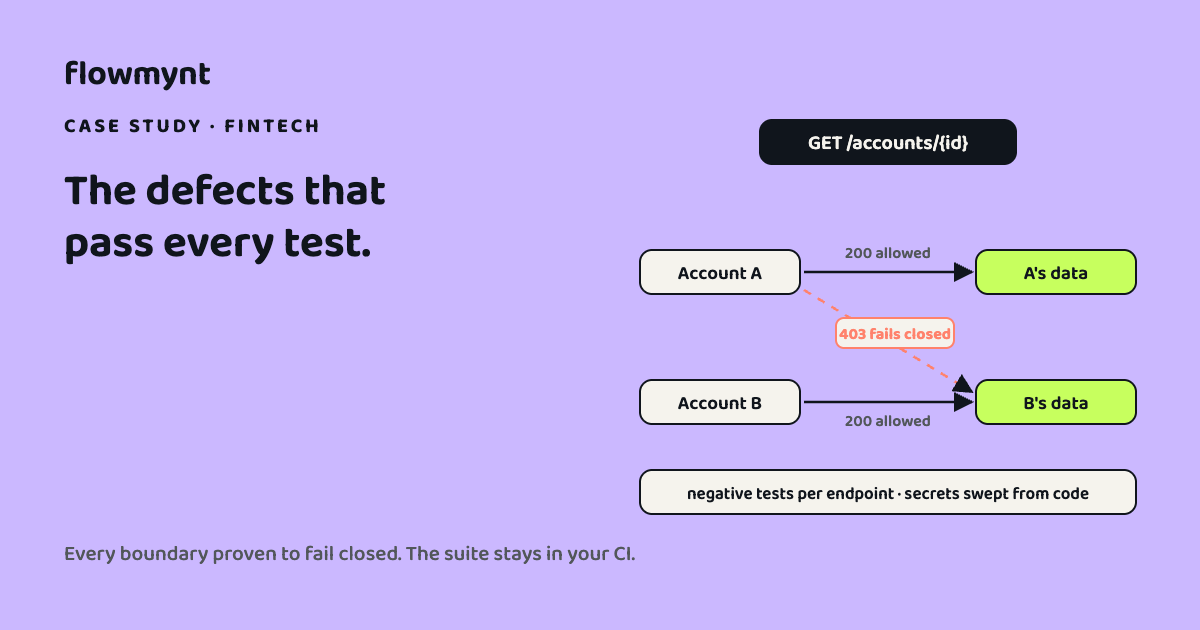
The most serious flaw in a fintech API is an authorisation defect, and it passes every functional test because the request is well-formed. Here is how Flowmynt proves each boundary fails closed, and sweeps code and bundles for secrets.
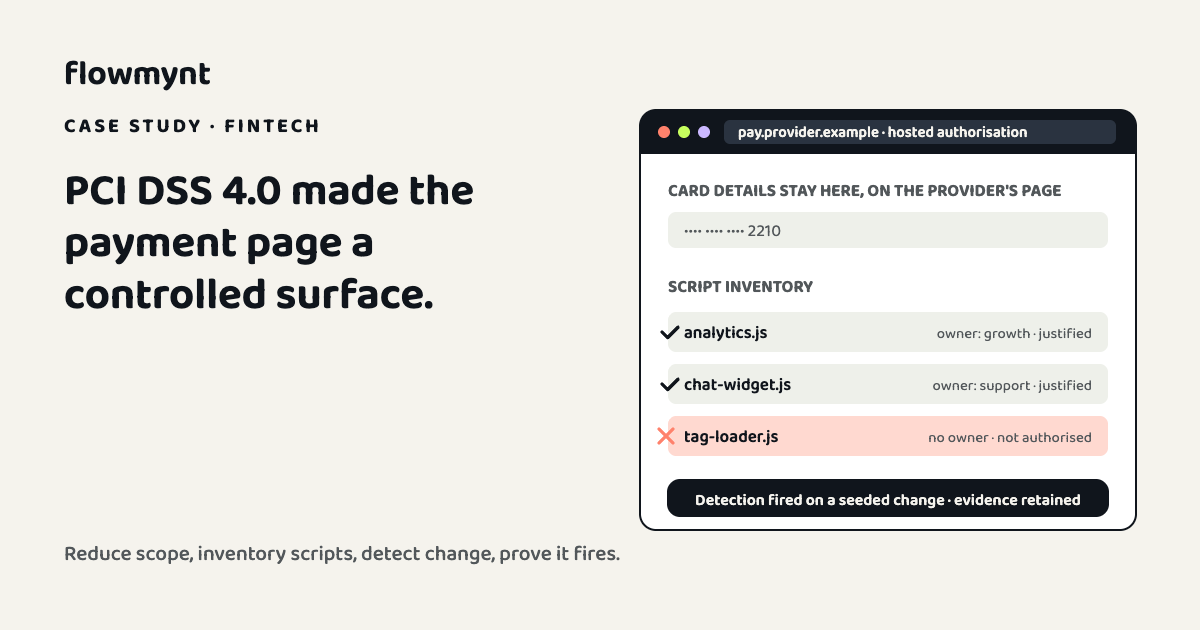
Requirements 6.4.3 and 11.6.1 mean every script reaching a payment page must be inventoried, authorised and integrity-checked, with tamper detection you can show firing. Here is how Flowmynt produces the inventory, the detection and the evidence as one run.
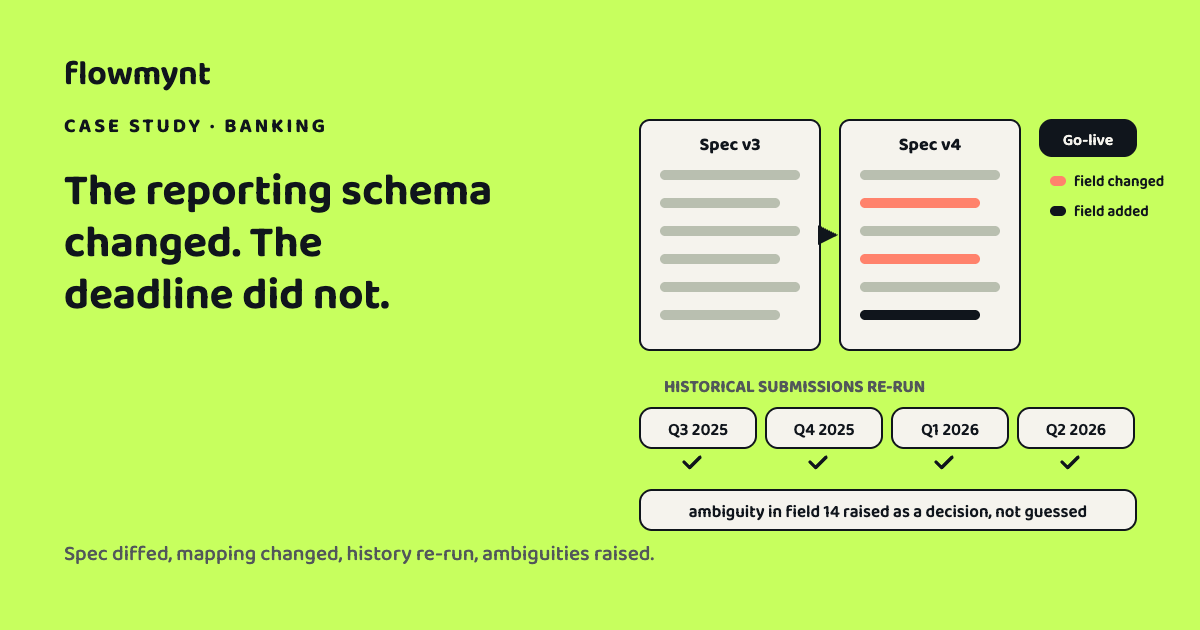
A regulatory reporting update arrives as a specification change with a fixed go-live. Here is how Flowmynt diffs the specification, changes the mapping and validation rules, runs historical submissions and hands you a reviewed change with the evidence attached.
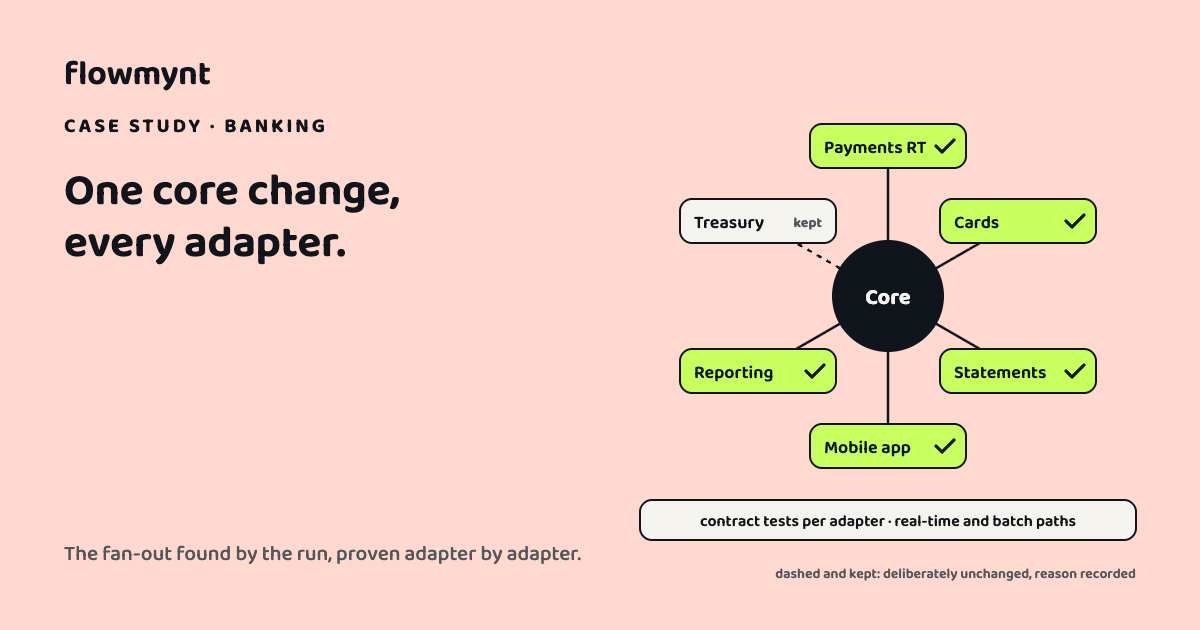
Message formats, field lengths and batch windows change on the core banking system's schedule, and every connected adapter needs the change applied and contract-tested. Here is how Flowmynt holds the whole fan-out as one run so no adapter is discovered late.